


How Can I Test My App Idea Without Spending Much Money?
What would happen if you spent six months and £50,000 building an app that nobody actually wants to use? I've watched this scenario play out more times than I should admit, and the worst part is that most of these failures could have been avoided with about two weeks of proper testing and maybe £500 spent in the right places. The mobile app graveyard is full of beautifully designed, technically sound applications that solved problems nobody really had, or solved them in ways that didn't quite match how people actually behave when they're standing in a queue at Tesco or sitting on the Northern Line during their Wednesday morning commute.
The most expensive app you'll ever build is the one based on assumptions rather than evidence.
Testing your app idea doesn't require a massive budget or a six-month development cycle... what it requires is a willingness to get feedback early, accept that your first version of the idea probably isn't quite right (mine never are), and the discipline to validate each assumption before you commit serious money to building the thing. I've probably validated about 50 app concepts over the years, and the ones that succeeded commercially all had something in common: the founders tested ruthlessly before they built anything permanent, they listened to what the market was actually telling them rather than what they hoped to hear, and they were prepared to adjust course when the evidence pointed in a different direction.
Start With Real Conversations Before Writing Code
The very first thing I do when someone comes to me with an app idea is send them back out to have at least ten proper conversations with people who would theoretically use the thing. Not friends or family who'll be polite, but actual strangers who fit the target user profile and have no reason to spare your feelings. These conversations aren't about pitching your idea or getting people excited... they're about understanding the problem space, how people currently deal with the issue, what they've already tried, and where the existing solutions fall short.
I worked with someone who wanted to build a meal planning app for busy parents. Seemed reasonable enough. But after talking to about fifteen parents, we discovered that the problem wasn't meal planning at all... it was making decisions when you're exhausted at 6pm with hungry children demanding attention. The app that eventually got built looked nothing like the original concept, but it actually solved a real problem that people were willing to pay to fix. This kind of early validation through user research prevents you from building features nobody wants.
Here's what to ask in these conversations:
- Tell me about the last time you encountered this problem
- How did you solve it or work around it
- What's the worst part about the current way you handle this
- Have you tried other solutions before
- What would make this problem worth solving for you
The answers will surprise you. They always do. You'll hear about constraints and contexts you hadn't considered, you'll discover that what you thought was the main problem is actually just a symptom of something deeper, and you'll start to understand the difference between what people say they want and what they'll actually use when it exists.
Paper Prototypes and Clickable Mockups Get You 80% There
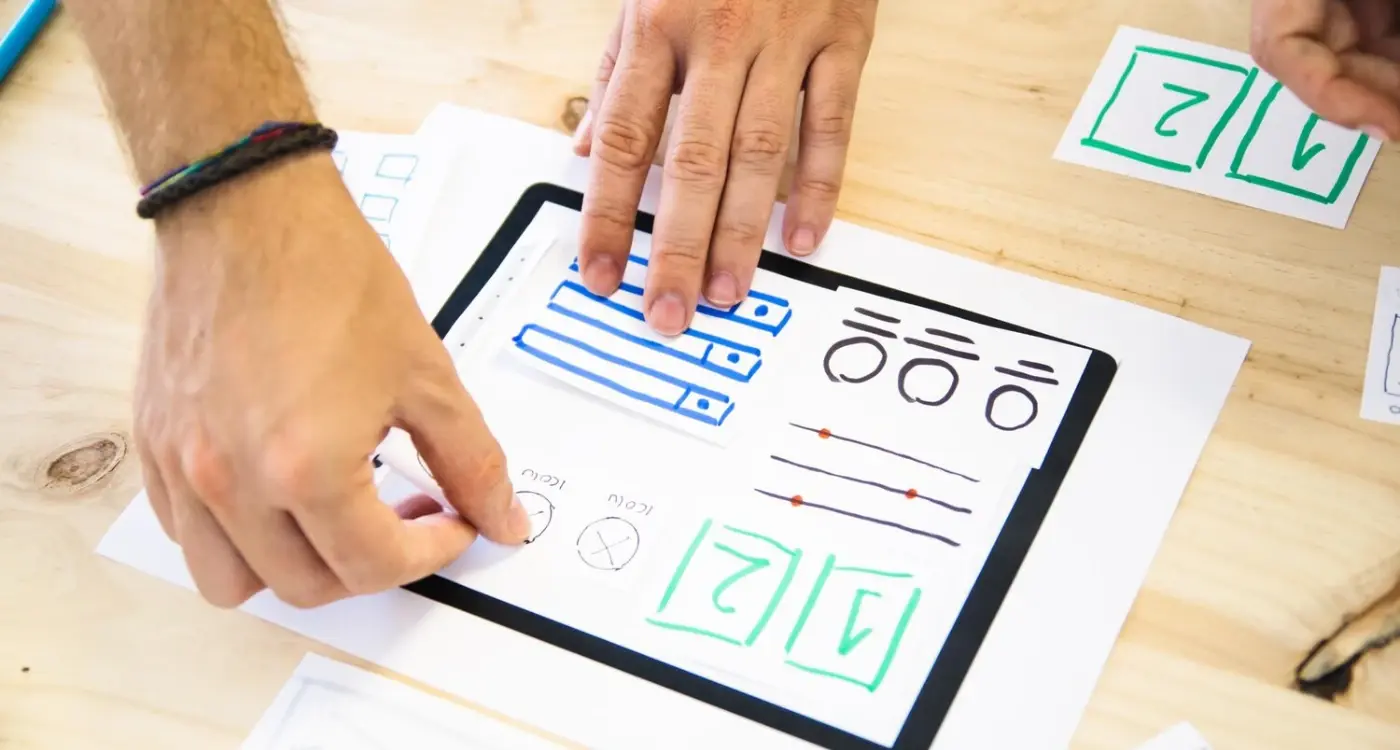
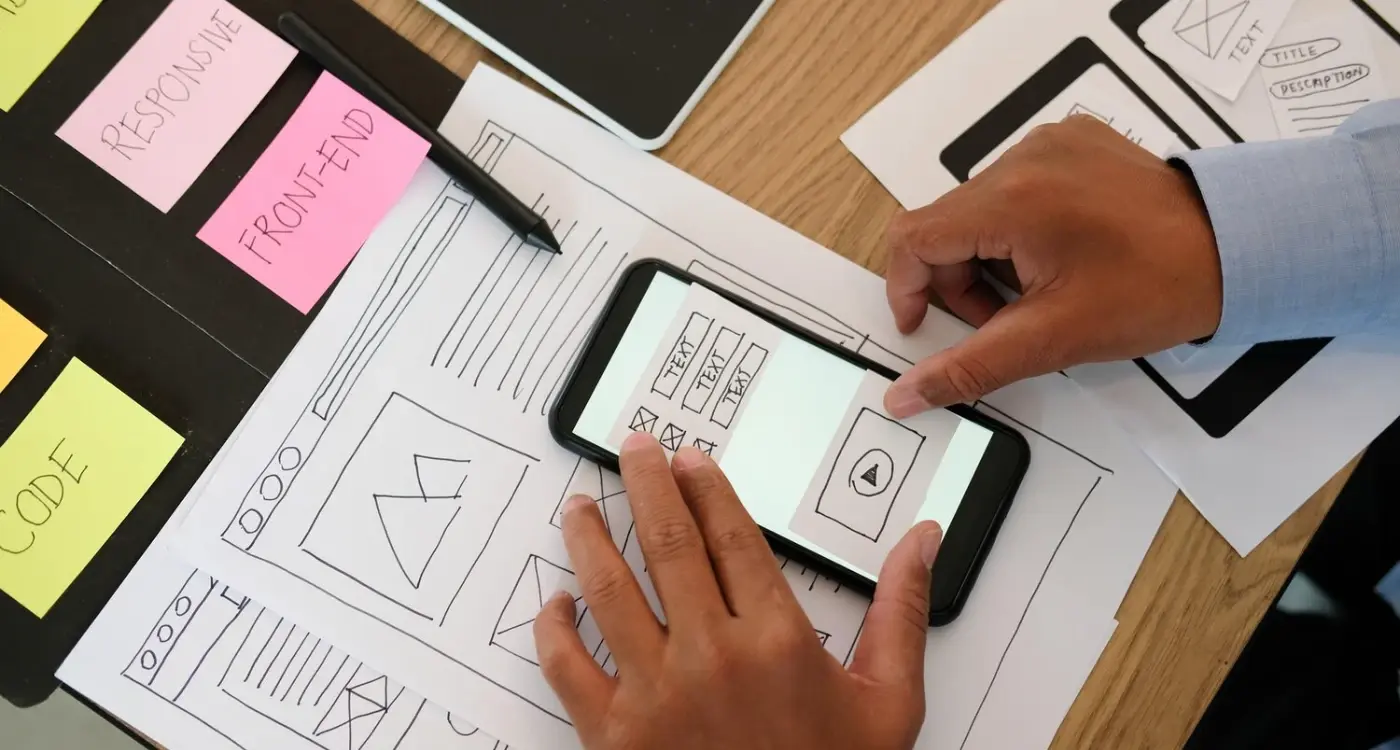
Once you've done your conversations and you've got a clearer picture of what might work, the next step is sketching out the basic screens and user flows on paper or in a simple design tool. I still start most projects with literal paper sketches because it forces you to focus on structure and flow rather than getting distracted by colours and fonts and all the visual polish that doesn't matter yet. You can test a paper prototype with users by literally putting sketches in front of them and asking them to show you how they'd complete a task, moving the bits of paper around as they navigate through your imagined interface.
Figma is free. It works. I've tested entire app concepts using Figma prototypes that took maybe six hours to put together, getting feedback from real users about whether the navigation makes sense, whether they understand what each screen does, and whether the core value proposition is clear enough that they'd consider downloading the actual app if it existed. This low-fidelity testing approach saves massive amounts of development time and money.
Record your prototype testing sessions on your phone. You'll catch problems in the recordings that you miss during the live session, particularly the moments where users hesitate or look confused before figuring something out.
The beauty of testing at this stage is that changes cost you nothing except time... you're not rewriting code or rebuilding databases or unpicking technical decisions that ripple through the entire system. If something doesn't work, you just sketch a different version and test that one instead. I've gone through eight or nine completely different navigation structures for a single app before finding one that actually made sense to users, and because we were still working with mockups, those iterations took days instead of months.
Landing Pages That Actually Test Demand
Building a simple landing page that describes your app and asks people to sign up for early access will tell you more about real demand than a hundred conversations with supportive friends. This isn't about tricking anyone or taking money for something that doesn't exist... it's about seeing whether people who don't know you and have no reason to be nice will actually take action when presented with your solution.
You can build a decent landing page in an afternoon using Carrd or Webflow or even just a Google Form embedded in a simple webpage. The page should explain what the app does, who it's for, what problem it solves, and include an email signup form for people who want to be notified when it launches. Then you drive a small amount of paid traffic to it, maybe £100 on Facebook ads or Google ads targeted at your specific audience, and you see what happens. This approach to building an email list before launch validates demand while creating a foundation for your marketing.
What you're measuring here:
| Metric | What It Tells You | Good Benchmark |
|---|---|---|
| Click-through rate | Is the concept interesting enough to learn more | 2-5% from ads |
| Email signup rate | Would people actually use this thing | 15-30% of visitors |
| Cost per signup | What acquisition might cost at scale | Under £3 is decent |
I ran this test for a healthcare appointment booking app and got about 200 email signups from £150 in ad spend, which told us there was real demand worth building for. Compare that to another project where we spent £200 and got twelve signups... that one we didn't build, which saved the client probably £80k in development costs and six months of wasted time.
Beta Testing with 20 Users Beats Focus Groups of 200
Once you've validated the concept and tested the prototype, you need to build something real that people can actually use in their normal lives. This doesn't mean building the full vision... it means building the absolute minimum that delivers the core value, which we'll talk about in the next section. But once you've got that minimum version working, you need to get it into the hands of real users who will use it for real tasks, not test it politely in a conference room while you watch.
Twenty users who use your beta app daily for two weeks will teach you more than any focus group ever could. You want people who actually have the problem you're solving, who are motivated enough to put up with bugs and missing features, and who'll give you honest feedback about what's working and what isn't. I usually find these people from the email list we built with the landing page, offering them free lifetime access or some other perk in exchange for detailed feedback. When research shows conflicting results from different user groups, beta testing with real usage helps clarify what actually matters.
Real usage data from a small group beats opinions from a large group every single time.
What you're watching for isn't what people say about the app... it's what they actually do with it. Are they opening it multiple times per day or did they use it twice and forget about it? Which features do they actually use versus which ones do they ignore completely? Where do they get stuck or confused? What tasks do they try to accomplish that your app doesn't currently support?
TestFlight for iOS and Google Play's closed testing track for Android make this process straightforward. You can push updates quickly, gather crash reports automatically, and get version feedback before releasing to the wider world. I've had beta periods that lasted three weeks and others that ran for four months, depending on how much we needed to learn and adjust before the public launch.
Build Only What Proves the Core Value
The biggest mistake I see people make is building too much before they test whether anyone wants the basic thing. Your minimum version needs to deliver the core value proposition and nothing else... if you're building a fitness app that helps people stay accountable to their workout goals, the first version just needs workout logging and some kind of accountability mechanism. It doesn't need social features, it doesn't need AI-powered coaching, it doesn't need integration with every fitness tracker on the market.
I call this the "one job" test. Can you describe what your app does in a single sentence without using the word "and"? If not, you're probably building too much. The app I mentioned earlier that helps parents make dinner decisions... the first version literally just asked three questions and suggested a meal. That's it. No shopping lists, no recipe database, no meal planning calendar. Just the one thing that solved the core problem, which we could build in about six weeks for around £12k instead of the six-month, £60k version with all the nice-to-have features. Understanding whether to build competitor features or focus on unique value helps you prioritise what matters most.
Features to cut from your first version:
- Social sharing and community features unless they're the core value
- Multiple user types or permission levels
- Extensive customisation and settings
- Integration with third-party services
- Complex reporting and analytics for users
- Anything described as nice-to-have or eventually
You can always add these things later if the core concept works and people actually use the basic version. But if the core concept doesn't work, having a beautifully designed settings screen won't save you. I've seen apps with 50 features get ignored while apps with three features get used daily, and the difference is always whether those three features actually solve a real problem in a way that fits into people's lives. When deciding which features to prioritise, it's crucial to understand how to handle user feature requests without losing focus on your core value proposition.
Free and Cheap Tools That Do the Heavy Lifting
You don't need enterprise software or expensive platforms to test your app idea properly. The tools available now for free or cheap are honestly better than what we had available a decade ago at any price. Figma gives you professional design and prototyping capabilities for free. Notion or Airtable can serve as your backend database for testing purposes. Google Forms and Typeform handle surveys and data collection. Loom lets you record video feedback sessions without any special equipment.
Set up a private Discord server or Telegram group for your beta testers. It costs nothing and creates a space where testers can share feedback, report bugs, and see that they're part of something real rather than just filling out forms.
For actually building a testable version of your app without spending £50k on custom development:
| Tool | What It's For | Cost |
|---|---|---|
| Bubble or Adalo | No-code app building | £20-40/month |
| Glide | Apps from spreadsheets | Free to £30/month |
| Firebase | Backend and database | Free tier is generous |
| Hotjar | User behaviour recording | Free for basic usage |
| Mixpanel | Analytics and tracking | Free under 20m events |
I built a fully working prototype for a property management app using Glide and Google Sheets that handled real data from real properties. Total cost was £25 for one month of Glide Pro. We tested it with five property managers for three weeks, learned what we needed to learn, and then made informed decisions about what to build properly and what to skip. That £25 prototype saved us from building about £8,000 worth of features that nobody actually needed. Testing whether new technology helps users is essential before investing in complex features.
When to Spend Money and When to Stay Scrappy
There are moments in the testing process where spending money actually saves you time and gets you better information faster, and there are other moments where spending money is just wasteful. The trick is knowing which is which, and that usually comes down to whether the money buys you learning or just makes things look prettier.
Spend money on getting your prototype or beta version in front of more real users through paid advertising, because that's learning. Don't spend money on custom illustrations for your landing page, because that's just decoration. Spend money on tools that let you test faster or measure better. Don't spend money on features that go beyond your core value proposition. Spend money on fixing the bugs that stop people from completing key tasks. Don't spend money on animations and transitions that make things feel smoother but don't change behaviour.
Worth spending on during testing:
- Paid user acquisition to test your landing page (£100-300)
- A designer for a day to make your prototype look credible (£300-500)
- Survey incentives to get quality feedback (£5-10 per respondent)
- Development time to fix blocking bugs in your beta (varies)
- Analytics tools that show you what users actually do (£20-50/month)
I've validated app concepts for as little as £350 total and as much as £3,000 depending on how much we needed to build to test the core value. But I've never needed to spend more than about three grand to get enough information to make a confident decision about whether to proceed with full development. If someone tells you that you need £20k just to validate an idea, they're probably selling you things you don't need yet. Once you've proven demand, you can start thinking about whether your pricing fits the market and what monetisation strategy makes sense.
Reading the Signals That Matter
All this testing generates a lot of information, and knowing which signals actually matter versus which are just noise takes some experience. People will tell you they love your app while never opening it again. They'll complain about missing features while ignoring the ones you already built. They'll say they'd pay £5 per month and then balk at 99p. What you're looking for isn't what people say... it's what their behaviour tells you about whether you've actually solved something they care about.
The signals that actually predict success are pretty consistent across every app I've worked on. Do people use it more than once without you prompting them? That's retention, and it's the most important metric you can measure. Do they complete the core task you built the app for? That's activation, and it tells you whether your solution actually works. Do they come back within a week? That's the beginning of habit formation. Do they tell other people about it without you asking? That's organic growth, and it means you've solved something painful enough that people want to share the solution.
If you have to beg people to use your beta app, you probably haven't solved a real problem yet.
Bad signals disguised as good signals include lots of downloads but no usage, enthusiastic feedback but no retention, interest in features that go beyond the core value, and people saying they'd pay but not actually paying when given the chance. I tested a productivity app that got 500 signups on the landing page and 200 beta testers, which looked great until we saw that 180 of them used it once and never came back. The ones who did stick around all said they liked it but wouldn't pay for it. We didn't build that one, and we were right not to.
The apps that went on to succeed commercially all had at least 40% of beta testers using them three times per week or more, with session lengths that made sense for the task (anywhere from 30 seconds for a quick utility to 15 minutes for something more involved). They had retention rates above 30% after week one, and they had at least some users who asked when they could pay or what the pricing would be without us bringing it up first. When you do reach this point and need to show investors your app will make money, this usage data becomes crucial evidence.
Conclusion
Testing your app idea properly costs a fraction of what building the wrong thing costs, and the process itself usually makes your concept better even when the initial idea was sound. The apps I've worked on that skipped testing and went straight to full development succeeded maybe 20% of the time. The ones that went through proper validation succeeded closer to 70% of the time, and even the ones that didn't succeed failed faster and cheaper, which meant the founders could move on to better ideas without losing their life savings.
You don't need a huge budget to test whether your app idea has legs... you need a willingness to hear what the market tells you, the discipline to build only what proves the core value, and enough time to have real conversations with real users before you write a single line of production code. The money you spend on testing isn't a cost, it's an insurance policy against building something nobody wants, and it's probably the best £500 to £3,000 you'll spend on your entire app journey.
If you're sitting on an app idea and want help figuring out how to test it properly without burning through your budget, get in touch and we can talk through what makes sense for your specific situation.
Frequently Asked Questions
Start with at least 10-15 conversations with strangers who fit your target user profile, not friends or family who'll be polite. You'll typically start seeing patterns after about 8-10 interviews, but push to 15 to ensure you're not missing important insights. Focus on quality over quantity - one honest conversation with someone who has the real problem is worth more than five polite chats with people trying to be helpful.
Not necessarily, but signup rates below 10-15% of visitors usually indicate either the wrong audience, unclear messaging, or weak demand. Before abandoning the idea, try testing different headlines, targeting different user segments, or adjusting your ad targeting. If you're consistently getting under 5% signups after testing several variations, that's a strong signal the concept needs rethinking.
Most validation can be done in 3-6 weeks depending on how much you need to build to test the core value. Spend 1-2 weeks on user interviews, 1 week building and testing prototypes, and 2-3 weeks running landing page tests and beta testing if needed. Don't drag it out longer than two months - you'll either have clear signals by then or you're probably overthinking it.
Friends and family can be useful for spotting obvious usability issues, but they're terrible for validating whether people actually want your solution. They'll be too polite and won't give you the honest feedback you need about whether they'd pay for it or use it regularly. Instead, offer small incentives (£5-10) to strangers from relevant Facebook groups or online communities.
Testing an idea focuses on validating demand and understanding the problem before you build anything permanent, while an MVP is what you build after validation shows the idea has merit. Testing uses mockups, landing pages, and conversations to learn cheaply, while an MVP is actual working software designed to deliver core value to early users. Many people skip validation and jump straight to MVP, which is where the expensive failures happen.
You're not looking for statistical significance at this stage - you're looking for patterns and obvious problems that would block adoption. If 6 out of 10 people can't figure out how to complete your main task, that's a clear signal regardless of sample size. The goal is identifying major issues and validating core assumptions, not precise measurements you'd need for a research paper.
Listen to what the feedback tells you about user behaviour and pain points, but remember that users are often better at identifying problems than designing solutions. If multiple users struggle with something you think is important, the issue is usually in your implementation or communication, not their understanding. Be willing to adjust your approach while staying true to the core problem you're trying to solve.
Absolutely - existing competitors often validate that there's real demand, and user interviews will reveal gaps in current solutions that you can exploit. Focus your testing on understanding why people use or don't use existing apps, what frustrates them about current options, and whether your different approach actually solves those problems better. Competition is usually a good sign, not a reason to avoid testing.
Share this
Subscribe To Our Learning Centre
You May Also Like
These Related Guides
Which Features Should I Test Before Adding Them to My App?
How Do You Test Your App Idea Without Building Anything?