


How Connected Cars Are Changing App Development Forever
A driver pulls into their garage after a long day at work, and before they've even switched off the engine, their phone buzzes with a notification. Their car has already sent data about low tyre pressure to their mobile app, scheduled a service appointment for next week, and updated their insurance company about their driving habits to potentially lower their premium. This isn't science fiction—this is happening right now in garages across the country.
Connected cars are fundamentally changing how we think about mobile app development. We're not just building apps that sit on phones anymore; we're creating software that needs to communicate seamlessly with vehicles travelling at high speeds, processing real-time data from dozens of sensors, and making split-second decisions that could affect passenger safety. It's a completely different world from the apps we built even five years ago.
The automotive industry isn't just adding technology to cars—it's completely reimagining what a vehicle can be, and that means we need to reimagine how we build the software that powers them
As someone who's been developing mobile apps for years, I can tell you that automotive apps present challenges I never expected. When your app needs to work while someone's driving at 70mph, standard UI principles go out the window. Voice commands become more important than touch interfaces, response times measured in milliseconds can mean the difference between safety and danger, and every single feature needs to pass rigorous testing standards that make typical app store requirements look like child's play. This industry transformation is reshaping everything we know about app development, from the initial design phase right through to ongoing maintenance and updates.
What Are Connected Cars and Why Do They Matter
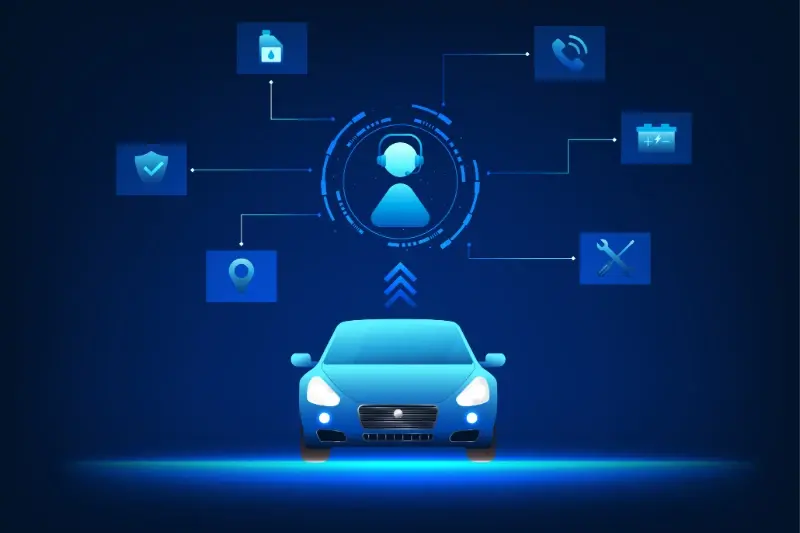
Connected cars are vehicles that can communicate with the internet, other cars, and road infrastructure through built-in technology. Think of them as smartphones on wheels—they can access data, run applications, and provide services that go far beyond traditional driving. These aren't just luxury features anymore; they're becoming standard equipment across most new vehicles.
The technology works through a combination of cellular connections, Wi-Fi, and Bluetooth systems that allow cars to send and receive information continuously. This connection enables everything from real-time traffic updates to remote diagnostics, over-the-air software updates, and integration with your mobile apps.
Why Connected Cars Are Changing Everything
For app developers like us, connected cars represent a massive shift in how we approach mobile development. We're no longer just building apps for phones and tablets—we're creating experiences that need to work seamlessly across devices, including the car's dashboard.
The numbers speak for themselves. Connected cars are becoming the norm rather than the exception, and this growth is driving demand for automotive-compatible applications that can enhance the driving experience safely and effectively.
Key Features That Matter Most
- Real-time navigation and traffic management
- Vehicle diagnostics and maintenance alerts
- Entertainment streaming and media control
- Emergency assistance and crash detection
- Remote vehicle monitoring and control
- Integration with smart home systems
What makes this particularly interesting from a development perspective is that connected cars aren't just consuming data—they're generating massive amounts of it. This creates opportunities for apps that can process and present this information in useful ways, whether that's helping drivers find parking spots or predicting when their car needs servicing.
The New Relationship Between Vehicles and Mobile Apps
The relationship between cars and mobile apps has completely flipped on its head. We used to think of our phones as separate devices that we'd connect to our car's Bluetooth for music or navigation. Now? The car is becoming part of the phone experience—or maybe it's the other way around.
What's fascinating is how automotive apps are no longer just companions to your driving experience; they're becoming the control centre for your entire vehicle. You can start your car remotely, check fuel levels, lock doors, and even pre-heat the interior before you've stepped outside. This shift means app developers are working with completely different requirements than they did just a few years ago.
When Your App Controls Real-World Hardware
Building apps that interact with vehicle systems is nothing like creating a standard mobile app. When someone taps "unlock doors" in your app, real mechanical systems need to respond instantly. There's no room for the usual "try again later" error messages we might accept in other apps.
The integration goes much deeper than simple remote controls too. Modern automotive apps can monitor engine performance, track driving patterns, schedule maintenance appointments, and even learn your preferred routes. Some apps can detect accidents and automatically contact emergency services—which brings a whole new level of responsibility to app development.
When developing automotive apps, always assume your users will have poor or intermittent internet connections. Design offline functionality from day one, not as an afterthought.
This transformation means vehicle technology is pushing app developers to think about reliability, security, and user safety in ways that traditional mobile apps simply don't require. The stakes are higher when your app is connected to something that weighs two tonnes and travels at high speeds.
How Automotive Apps Are Becoming More Than Just Entertainment
When most people think about apps in cars, they picture streaming music or watching videos during long journeys. But here's the thing—automotive apps have grown far beyond keeping passengers entertained. They're now doing proper work that changes how we drive, maintain our vehicles, and even how we think about car ownership.
Take diagnostic apps, for instance. Your car can now tell you what's wrong with it before you even notice a problem. These apps connect directly to your vehicle's computer systems and send alerts to your phone when something needs attention. No more guessing why that warning light came on; your app explains it in plain English and even suggests nearby mechanics.
Apps That Keep You Safe and Save Money
Fleet management apps are helping delivery drivers and taxi companies track fuel consumption, monitor driving patterns, and schedule maintenance automatically. Insurance companies are offering apps that monitor your driving habits—drive safely and your premiums go down. Some apps can even detect accidents and automatically call emergency services; pretty clever stuff really.
Remote control features have become standard too. You can start your car's engine from inside your house on cold mornings, check if you locked the doors from your office, or find your car in a massive car park using GPS. Parents are using tracking apps to monitor teenage drivers, setting speed limits and getting notifications if the car goes somewhere unexpected.
The shift from entertainment to utility represents a massive change in automotive app development. We're not just building apps that work alongside cars anymore—we're building apps that make cars smarter, safer, and more efficient. That changes everything about how we approach development.
The Technical Challenges That Make Car Apps Different
Building automotive apps isn't like building regular mobile apps—not even close. I've worked on apps for banks, restaurants, and social media platforms, but car apps? They're a completely different beast. The technical hurdles are unlike anything most developers face in traditional mobile development.
The biggest challenge is connectivity. Your app needs to work when the car is racing down a motorway at 70mph, switching between cell towers every few minutes. One moment you've got full signal, the next you're in a dead zone. Regular apps can buffer or wait for a connection—automotive apps need to keep working regardless. We're talking about seamless handoffs between different network technologies while maintaining real-time data streams for navigation, music, and vehicle diagnostics.
Hardware Integration Headaches
Then there's the hardware side. Automotive apps don't just run on phones; they integrate with the car's computer systems. We're talking CAN bus protocols, OBD-II ports, and dozens of sensors that speak different languages. Your app might need to communicate with the engine control unit, the infotainment system, and the climate control—all at the same time.
The car becomes part of your app's architecture, not just a place where someone uses it
Temperature variations add another layer of complexity. Your app needs to function whether it's -20°C in winter or 50°C inside a parked car in summer. Hardware components behave differently under these conditions, and software needs to compensate. Memory management becomes critical when processors are throttling due to heat, and battery optimisation takes on new meaning when you're drawing power from the vehicle's electrical system.
Safety Standards That Are Reshaping How We Build Apps
Building apps for connected cars isn't like building regular mobile apps—and the safety requirements prove it. When someone uses your app whilst driving, a glitch doesn't just mean a bad review; it could mean a serious accident. That's why the automotive industry has developed some of the strictest safety standards I've ever encountered in app development.
The ISO 26262 Standard
The big one is ISO 26262, which covers functional safety for road vehicles. This standard breaks down safety into different levels, from A (least critical) to D (most critical). Apps that can affect vehicle safety—think navigation systems or engine diagnostics—need to meet these requirements. We're talking about extensive testing, documentation that would make your head spin, and development processes that can take months longer than typical mobile apps.
But here's what really changes how we work: every line of code needs to be traceable. Every decision documented. Every test recorded. It's like building apps under a microscope, which honestly makes you a better developer—even if it drives you slightly mad at first! This level of rigorous app testing ensures that automotive applications can meet the high safety standards required in the industry.
Driver Distraction Guidelines
Then there's the driver distraction side of things. The NHTSA guidelines limit how long drivers can look away from the road and how many steps they can take to complete tasks. This means rethinking basic app design principles—forget complex menus or tiny buttons. Everything needs to be accessible within seconds, with voice control becoming less of a nice-to-have and more of a must-have feature.
These standards are making us build safer, more thoughtful apps. Yes, they slow down development, but they're creating a new generation of automotive apps that actually work in the real world.
User Experience Design When Your Screen Is Moving at 70mph
Designing apps for cars isn't like designing for your phone or tablet. When someone's driving down the motorway, they can't tap tiny buttons or read long paragraphs of text—that would be dangerous and frankly impossible. The whole approach to user experience design has to change when your screen is bouncing around in a moving vehicle.
The biggest challenge is making everything big enough and simple enough to use safely. Buttons need to be large, text needs to be readable at a glance, and navigation has to be dead simple. Most automotive apps limit the number of taps or swipes needed to complete any action. Some won't let you access certain features whilst the car is moving at all.
Voice Commands Are King
Touch screens become much less practical when you're trying to keep your eyes on the road. That's why voice control has become so important in automotive apps. Instead of tapping through menus, drivers can speak commands to change music, send messages, or get directions. The app has to understand different accents, background noise, and quick commands.
Design your automotive app interfaces with gloves in mind—buttons and controls need to work even when drivers are wearing thick winter gloves.
Safety-First Interface Design
Car apps often use what's called "driver distraction guidelines" which limit how long drivers can look away from the road. This means designers have to create interfaces that can be understood in just a few seconds. The principles of cross-device functionality become crucial as apps need to work seamlessly between smartphones, dashboard displays, and other connected devices. Here are the key principles:
- Use high contrast colours that work in bright sunlight
- Keep important information at eye level
- Limit the number of steps needed for any task
- Make sure everything works with voice commands
- Design for interruptions—drivers need to focus on the road first
The Future of App Development in an Automotive World
Looking ahead, the automotive industry is going to completely reshape how we think about building mobile apps. We're not just talking about small tweaks here and there—this is a fundamental shift that will affect every part of the development process. From the initial planning stages right through to ongoing maintenance, everything needs to be reconsidered when your app might end up running inside a car travelling down a motorway.
The skills that app developers need are changing too. We can't just focus on making things look pretty on a phone screen anymore; we need to understand vehicle systems, safety protocols, and how people behave differently when they're driving versus when they're sitting on their sofa. It's becoming a much more specialised field, and frankly, it's about time.
Key Changes Coming to App Development
- Voice interfaces will become the primary way people interact with apps in cars
- Apps will need to work seamlessly across multiple screens—your phone, your car's display, and even your smartwatch
- Real-time data processing will become standard rather than optional
- Safety testing will take up a much larger portion of development time and budget
- Apps will need to adapt their behaviour based on driving conditions and vehicle status
What excites me most is how this pushes us to build better apps overall. The constraints of automotive development—the focus on safety, the need for simplicity, the emphasis on reliability—these are things that make apps better for everyone, not just people in cars. We're being forced to strip away unnecessary complexity and focus on what really matters.
The automotive world isn't just changing app development; it's making us better at it. As successful app development companies have learned, adapting to new challenges and platforms often leads to innovations that improve the entire field.
Conclusion
The shift towards connected cars isn't just changing how we think about vehicles—it's completely reshaping the way we approach app development. After eight years of building apps for all sorts of industries, I can say with confidence that automotive apps present some of the most interesting challenges we've ever faced as developers.
What started as simple entertainment systems has evolved into something much more complex and meaningful. Vehicle technology now demands apps that can handle split-second safety decisions, work flawlessly in moving environments, and integrate seamlessly with sophisticated car systems. This isn't your typical mobile app development; it's a whole new discipline that requires us to rethink everything from user interface design to data processing speeds.
The safety standards alone have pushed our development practices to new levels. When an app failure could potentially affect someone's safety on the road, there's no room for the "move fast and break things" mentality that once dominated mobile development. We're now working with automotive-grade requirements that make traditional app testing look basic in comparison.
For developers and agencies like ourselves, this transformation represents both a challenge and an opportunity. The technical hurdles are higher, the safety requirements are stricter, and the user experience considerations are more complex than anything we've dealt with before. But that's exactly what makes automotive apps so compelling to work on—they're pushing the boundaries of what mobile technology can achieve.
Connected cars aren't just changing app development; they're setting new standards that will influence how we build all types of applications in the future.


Share this
Subscribe To Our Blog
You May Also Like
These Related Stories
The Complete Guide to Automotive App Development

Retina Display: Joys and Woes